
Victorian Floriography: The Secret Language of Flowers
Throughout the Victorian era, flowers weren’t simply pretty—they were coded messages. Lovers, friends, and even enemies used bouquets as secret missives, each bloom carrying meaning. Today, floriography lives on as a romantic, mysterious practice perfect for anyone drawn to symbolism, storytelling, or occult aesthetics.
Why the Victorians Spoke in Flowers
Victorian society had many rules—especially around emotion and courtship. Expressing desire directly was forbidden, so flowers became a covert language. A single bloom could confess love, deliver rejection, or send a warning.
Some of the most evocative examples include:
Dark Red Roses — deep, passionate love
Belladonna (Nightshade) — silence or danger
Lavender — devotion, purity
Black Tulips — forbidden longing
Marigold — grief and remembrance
These symbolic meanings influenced literature, artwork, and even funeral rituals—making floriography one of the era’s most beautiful forms of emotional expression.
Why Floriography Still Matters Today
Modern artists and collectors adore floriography because it blends:
Romance
History
Gothic symbolism
Nature’s hidden meanings
It offers endless inspiration for wall art, stationery, tattoos, and storytelling.
Bring Victorian Symbolism Into Your Space
If you’re crafting a dark academia or witchcore aesthetic, floriography adds emotional depth to your decor. Symbolic flowers can transform a room into a personal mythology—each bloom whispering a story.
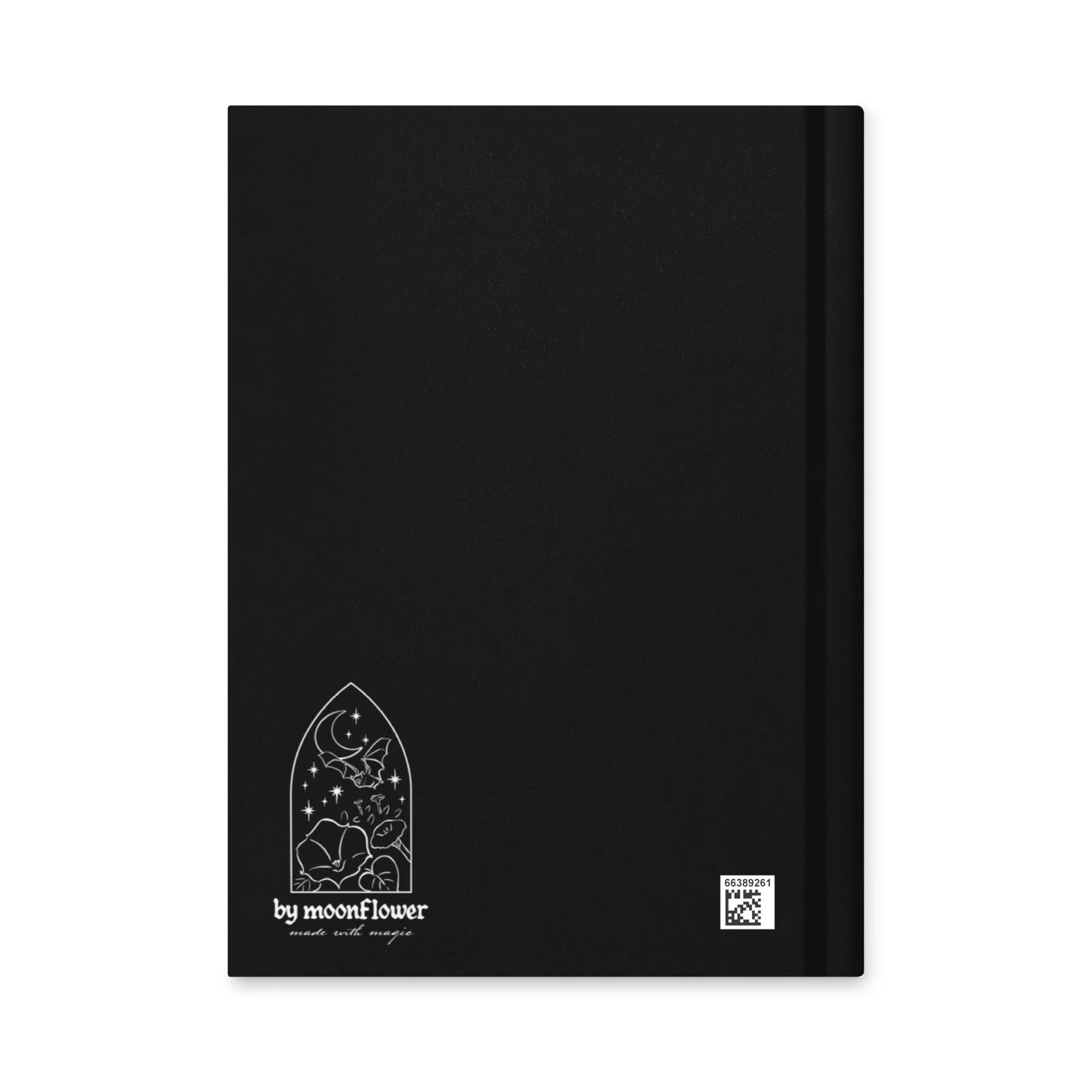
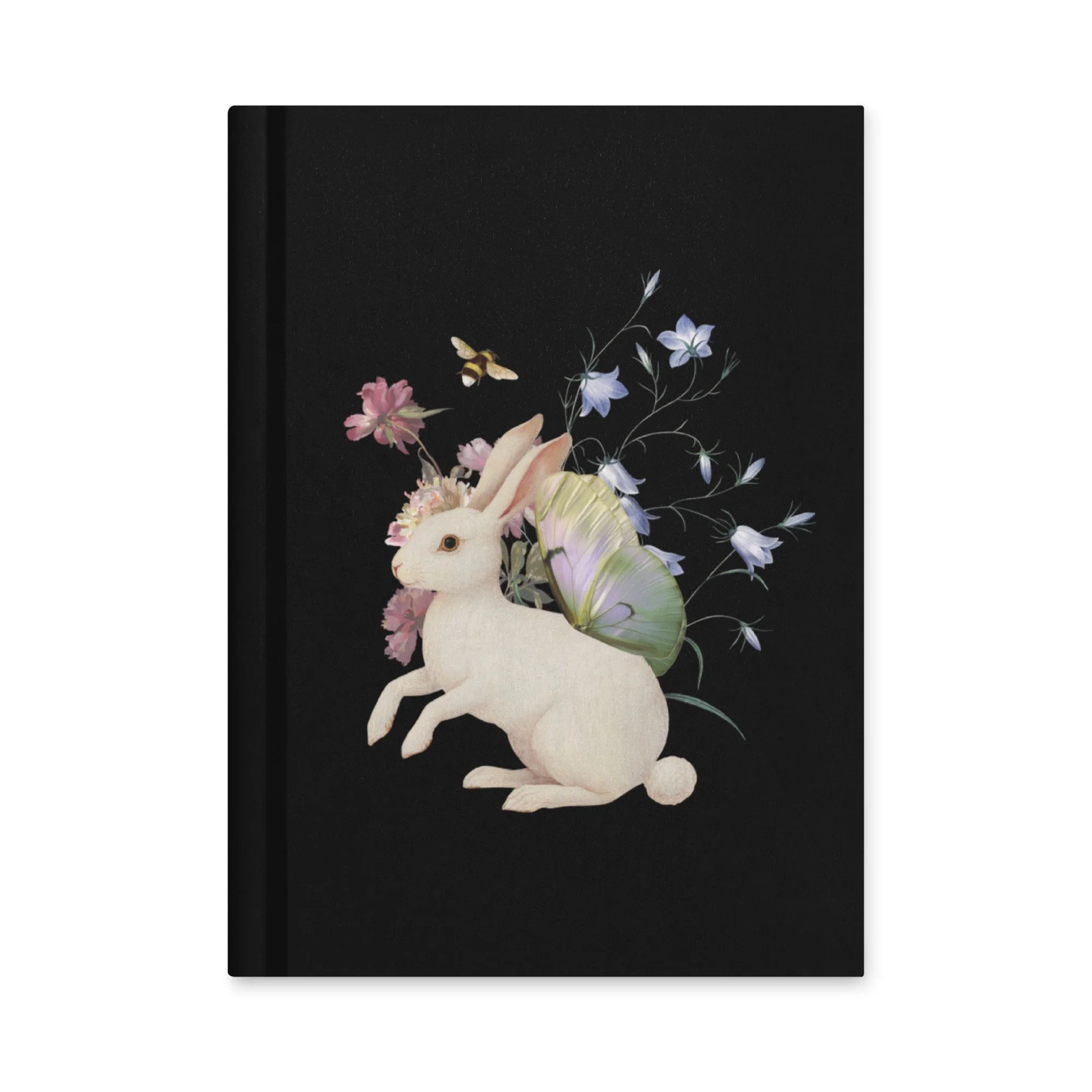
The vintage botanical details and pastel accents create a soothing, storybook aesthetic that makes journaling feel like stepping into your own enchanted meadow. Whether you use it for notes, sketches, poetry, planning, or reflection, this journal adds a touch of whimsy to every page.
With a smooth matte cover and high-quality pages inside (lined, blank, dotted—customize based on your POD provider), this notebook is perfect for students, writers, artists, or anyone who loves cute and magical stationery.
A comforting, whimsical companion for creativity and self-expression.
• Matte laminated front and back cover
• 150 pages (75 sheets): lined, cream-colored, uncoated
• Cover weight: 80 lb (118 g/m²)
• Page weight: 70 lb (104 g/m²)
• Dimensions: 5.75″ × 8″ (14.6 cm × 20.3 cm)
• Perforated pages for easy tear-out
• Casewrap binding with a flexible sewn spine
• Blank product sourced and fulfilled in the US
Perfect for:
• Journal lovers & stationery collectors
• Cottagecore & fairycore fans
• Back-to-school gifts
• Daily journaling or dream logs
• Art, writing, poetry, planning
• Cute gifts for friends, teens, and creatives
Age restrictions: For adults
EU Warranty: 2 years
In compliance with the General Product Safety Regulation (GPSR), Gallery Noelle LLC and SINDEN VENTURES LIMITED ensure that all consumer products offered are safe and meet EU standards. For any product safety related inquiries or concerns, please contact our EU representative at gpsr@sindenventures.com. You can also write to us at 915 W Foothill Blvd Suite C, Claremont, CA 91711 or Markou Evgenikou 11, Mesa Geitonia, 4002, Limassol, Cyprus.
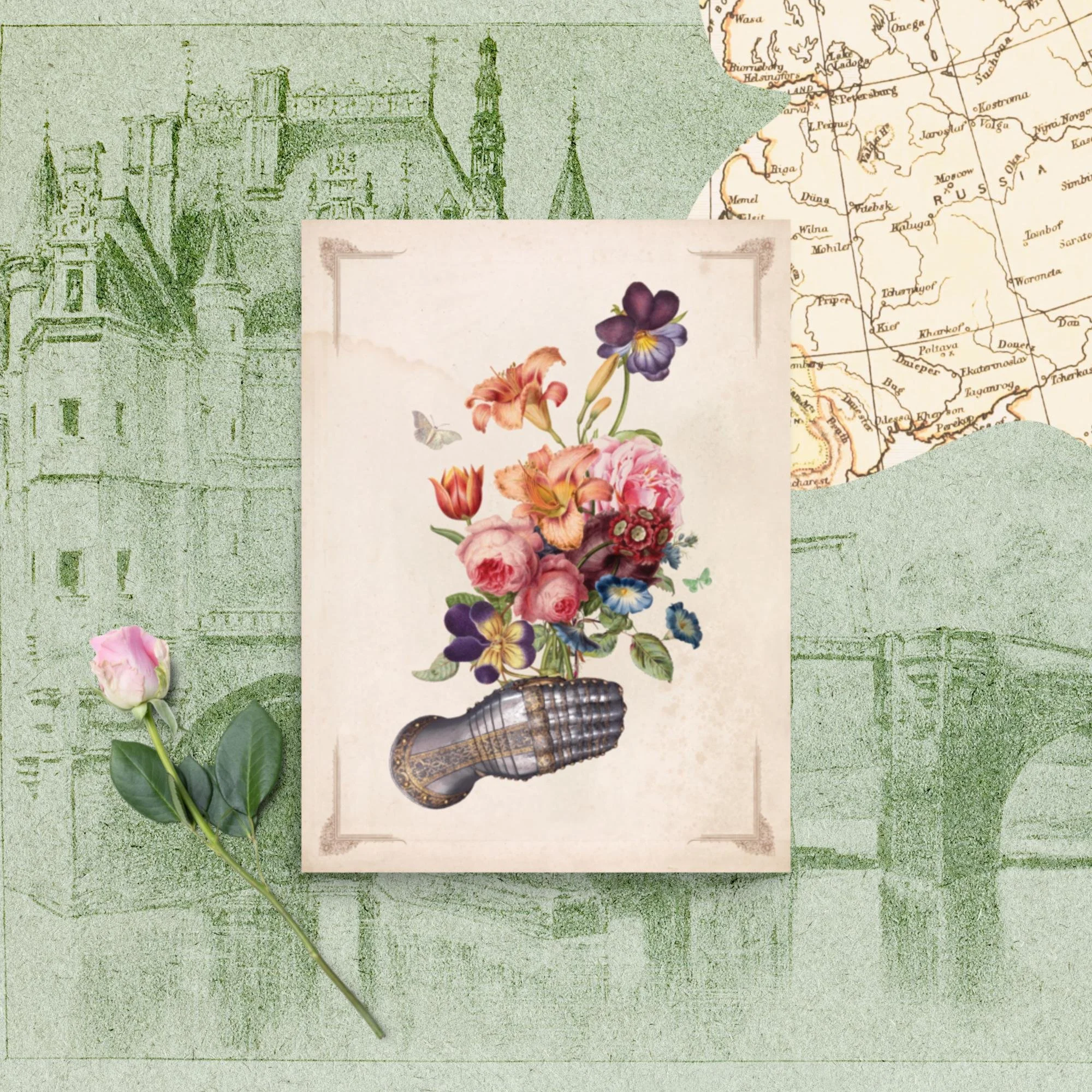
Designed by Lina Noelle
• Paper thickness: 10.3 mil
• Paper weight: 189 g/m²
• Opacity: 94%
• ISO brightness: 104%
• Paper is sourced from Japan
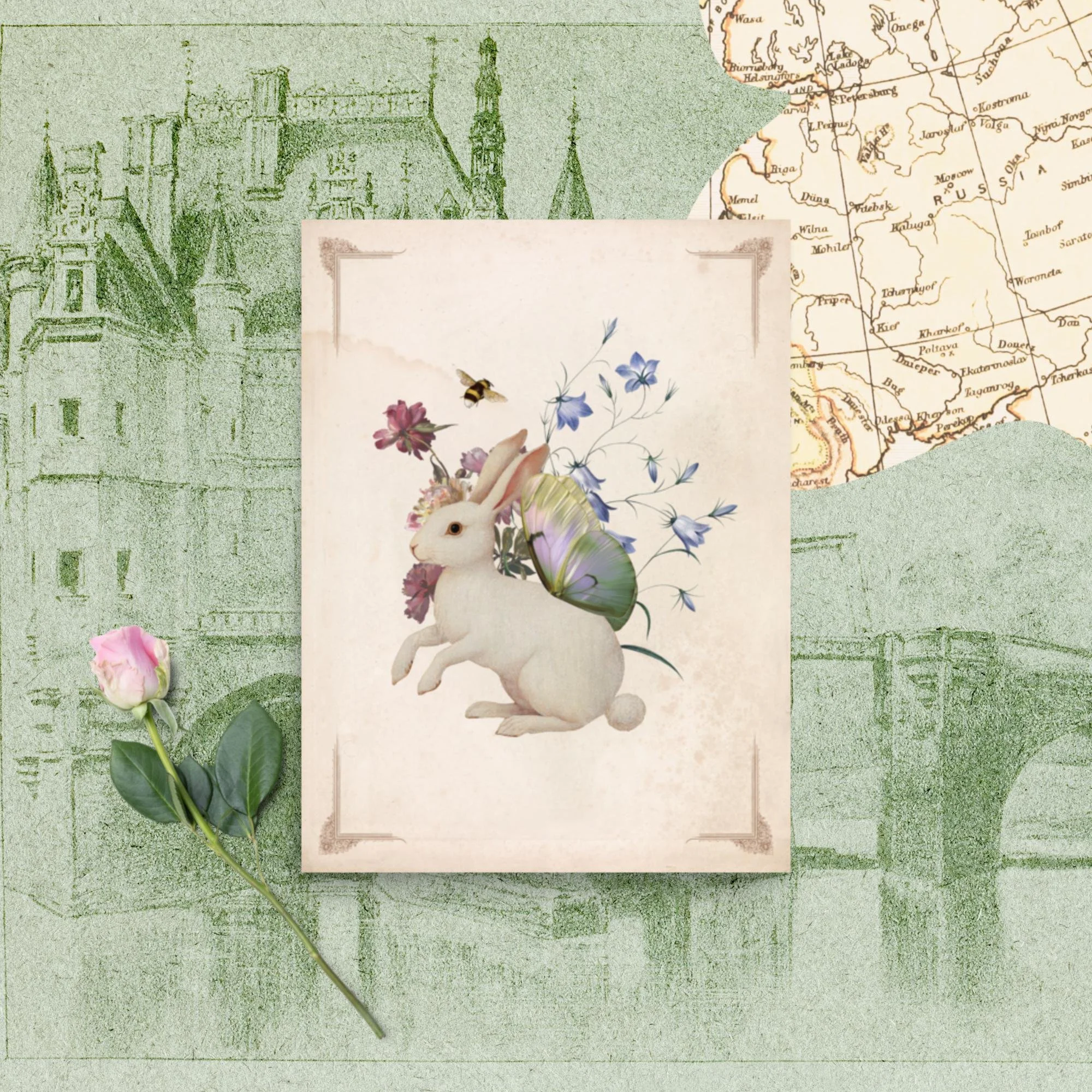
Transform your space with Fairy Meadow Bunny, a dreamy cottagecore art print featuring a white rabbit with ethereal butterfly wings surrounded by soft botanical florals and a charming bumblebee. This enchanting illustration blends fantasy, nature, and vintage aesthetics, making it perfect for whimsical home décor lovers.
With an antique-style background with ornate Victorian-inspired borders, this artwork feels like a page from a magical storybook. Its soft colors and gentle textures make it ideal for nurseries, bedrooms, craft rooms, reading nooks, and fairy-themed interiors.
Whether you love woodland creatures, botanical art, or magical fairycore décor, Fairy Meadow Bunny adds a sweet, timeless touch to any wall.
Designed by Lina Noelle
• Paper thickness: 10.3 mil
• Paper weight: 189 g/m²
• Opacity: 94%
• ISO brightness: 104%
• Paper is sourced from Japan
Age restrictions: For adults
EU Warranty: 2 years
Other compliance information: Meets the flammability, lead, cadmium, phthalates and formaldehyde level requirements.
In compliance with the General Product Safety Regulation (GPSR), Gallery Noelle LLC and SINDEN VENTURES LIMITED ensure that all consumer products offered are safe and meet EU standards. For any product safety related inquiries or concerns, please contact our EU representative at gpsr@sindenventures.com. You can also write to us at 915 W Foothill Blvd Suite C, Claremont, CA 91711 or Markou Evgenikou 11, Mesa Geitonia, 4002, Limassol, Cyprus.
