
The Hidden Symbolism Behind Common Medieval Motifs
Medieval art is filled with strange creatures, sacred geometry, and botanical symbols that still enchant artists today. These motifs weren’t random—they often carried spiritual, moral, or protective meanings.
The Moon
A symbol of femininity, intuition, and the cyclical nature of life. In illuminated manuscripts, crescent moons often represented divine mystery.
Snakes and Serpents
Feared yet revered, serpents symbolized temptation, knowledge, healing, or transformation depending on region and era.
Birds
Ravens — prophecy, death, the unknown
Doves — peace and divine guidance
Owls — esoteric knowledge and magic
Medieval Florals
Many manuscript flowers held hidden meanings:
Primrose — eternal love
Violet — humility
Lily — purity
Poppy — sleep, death, and dreams
Alchemical Shapes & Stars
Five-pointed stars represented celestial order, while seven-petaled flowers indicated spiritual transformation.
How to Use Medieval Symbolism in Modern Decor
These motifs add mysticism and story-rich imagery to:
Gothic wall galleries
Stationery collections
Spell journals
Moodboards
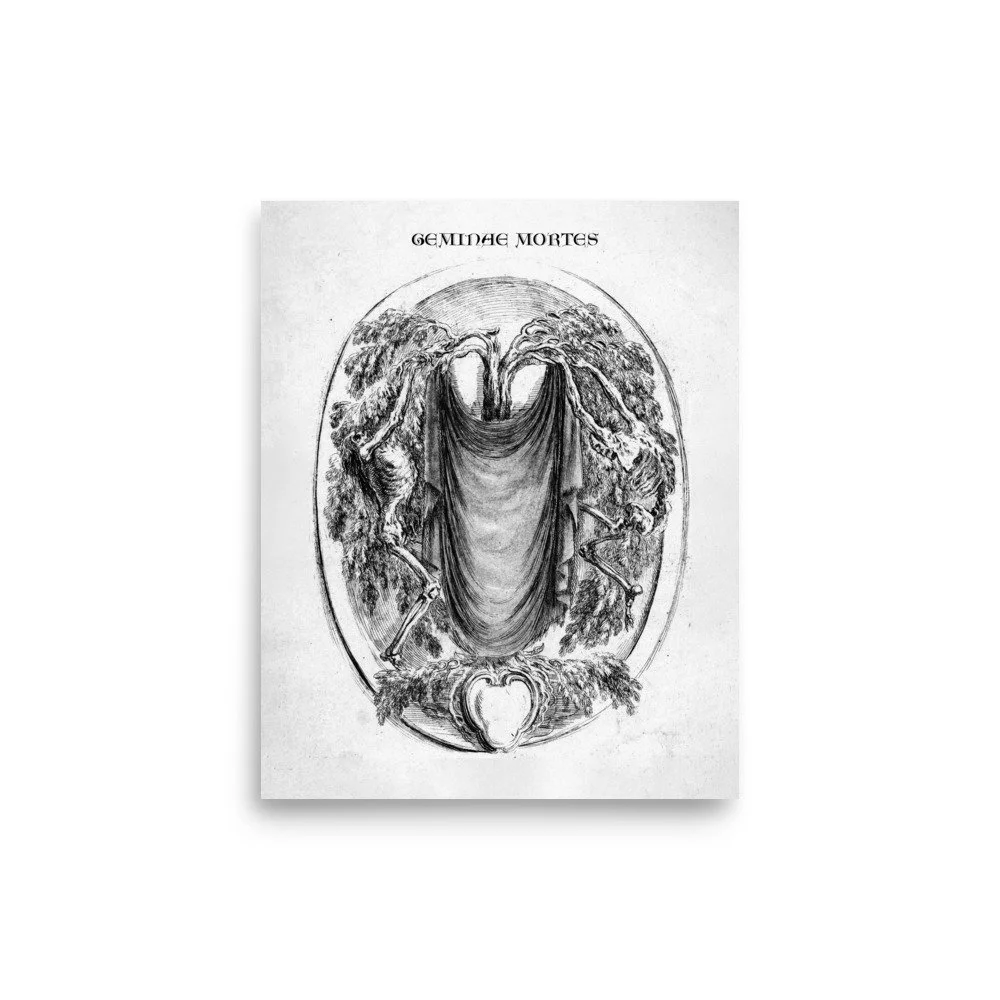
Inspired by 17th-century vanitas and baroque ornamentation. Twin skeletal figures stand in mirrored grace, their skeletal forms entwined with curling acanthus leaves and drapery—a poetic reflection on mortality, symmetry, and the delicate boundary between life and death.
• Paper thickness: 10.3 mil
• Paper weight: 189 g/m²
• Opacity: 94%
• ISO brightness: 104%
• Paper is sourced from Japan
Age restrictions: For adults
EU Warranty: 2 years
Other compliance information: Meets the flammability, lead, cadmium, phthalates and formaldehyde level requirements.
In compliance with the General Product Safety Regulation (GPSR), Gallery Noelle LLC and SINDEN VENTURES LIMITED ensure that all consumer products offered are safe and meet EU standards. For any product safety related inquiries or concerns, please contact our EU representative at gpsr@sindenventures.com. You can also write to us at 915 W Foothill Blvd Suite C, Claremont, CA 91711 or Markou Evgenikou 11, Mesa Geitonia, 4002, Limassol, Cyprus.
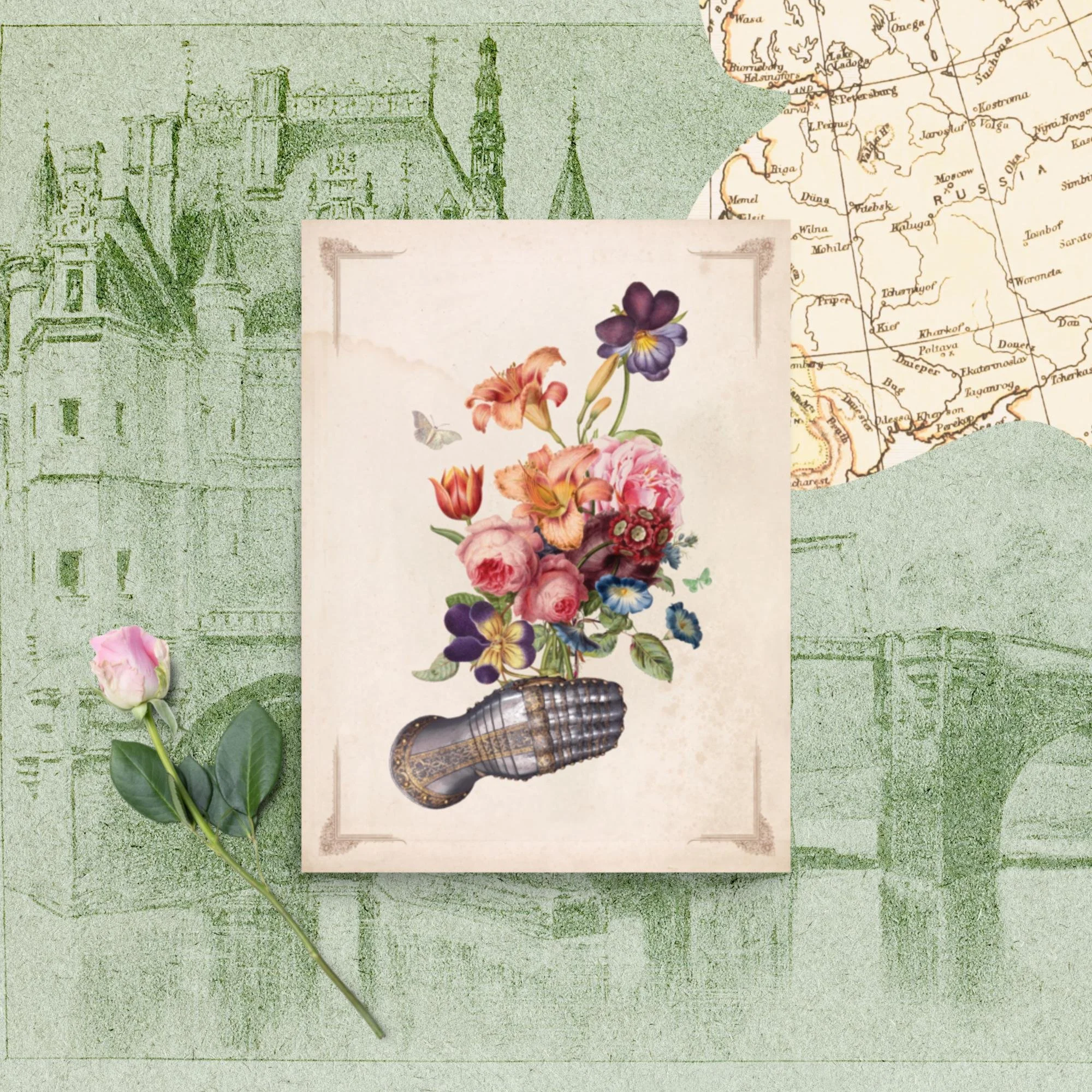
Designed by Lina Noelle
• Paper thickness: 10.3 mil
• Paper weight: 189 g/m²
• Opacity: 94%
• ISO brightness: 104%
• Paper is sourced from Japan
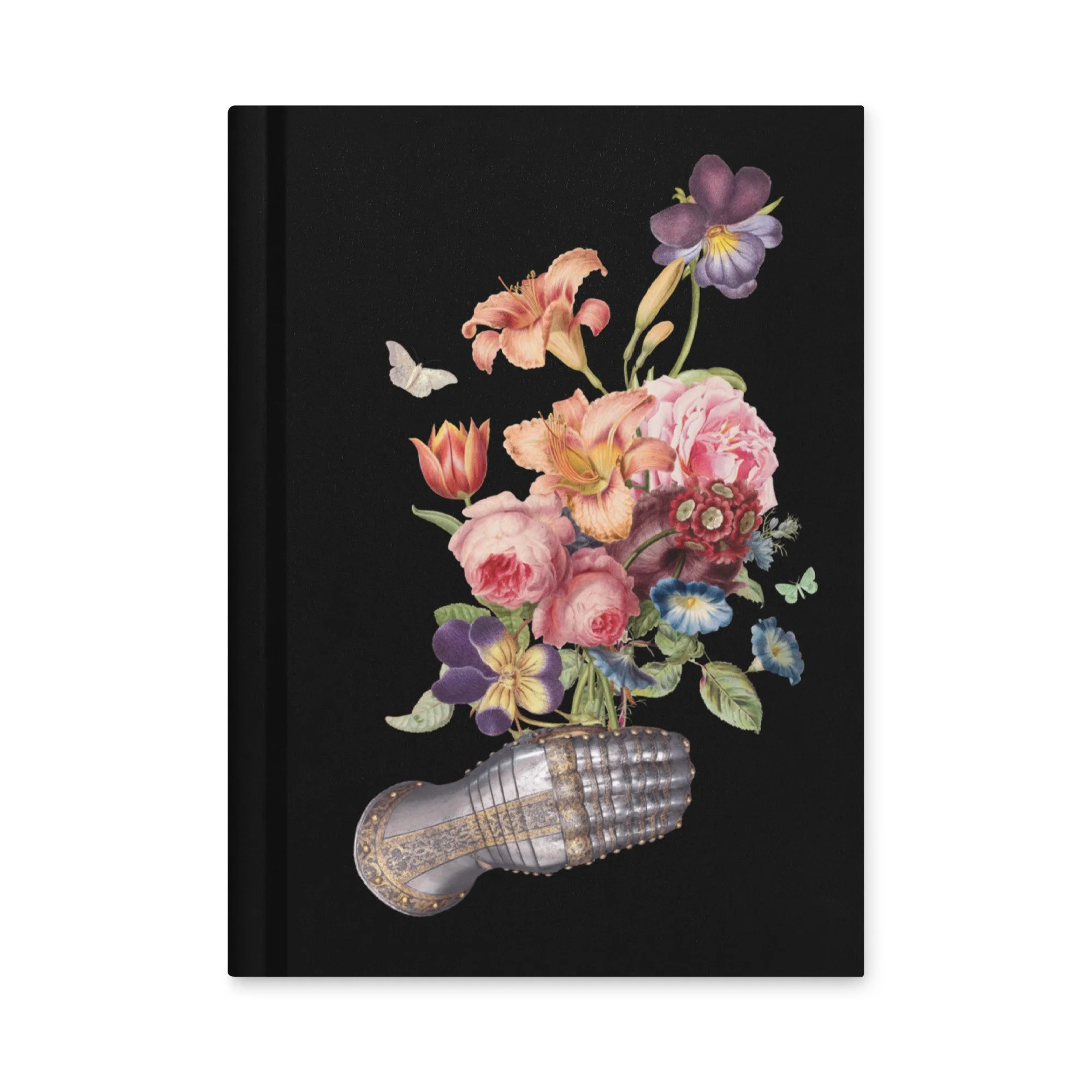

Hear ye, hear ye. Thou hast won the knight's favor. Wilt thou accept, fair maiden?
Designed by Lina Noelle
• Matte laminated front and back cover
• 150 pages (75 sheets): lined, cream-colored, uncoated
• Cover weight: 80 lb (118 g/m²)
• Page weight: 70 lb (104 g/m²)
• Dimensions: 5.75″ × 8″ (14.6 cm × 20.3 cm)
• Perforated pages for easy tear-out
• Casewrap binding with a flexible sewn spine
• Blank product sourced and fulfilled in the US
Age restrictions: For adults
EU Warranty: 2 years
Other compliance information: Meets the flammability, lead, cadmium, phthalates and formaldehyde level requirements.
In compliance with the General Product Safety Regulation (GPSR), Gallery Noelle LLC and SINDEN VENTURES LIMITED ensure that all consumer products offered are safe and meet EU standards. For any product safety related inquiries or concerns, please contact our EU representative at gpsr@sindenventures.com. You can also write to us at 915 W Foothill Blvd Suite C, Claremont, CA 91711 or Markou Evgenikou 11, Mesa Geitonia, 4002, Limassol, Cyprus.
